




From “Going Global” to “Integrating In”: China’s Bakery Equipment Finds Answers in Latin America
How Chinese Manufacturing Is Deeply Integrating with Local Industry — Insights from MEXIPAN 2026
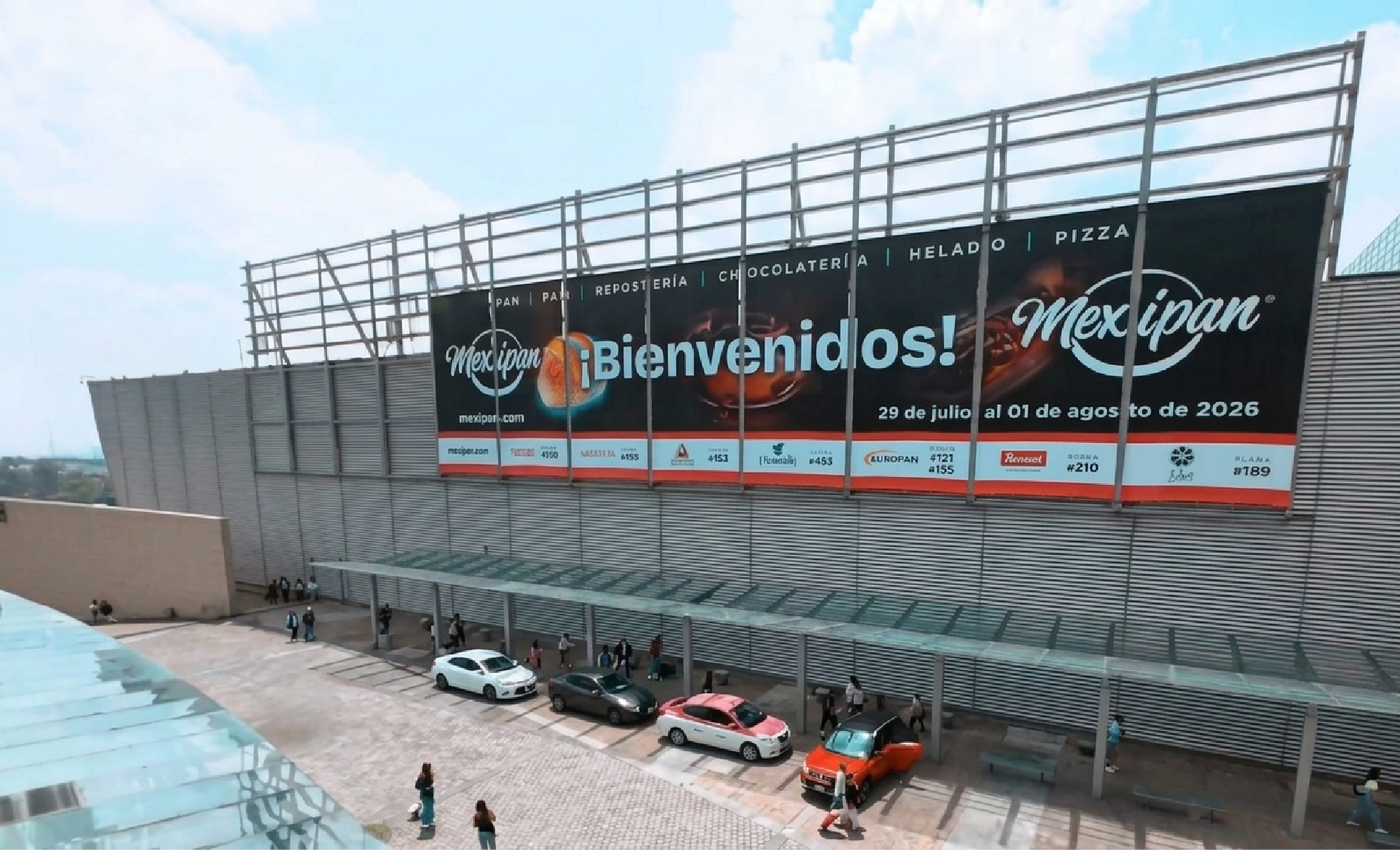
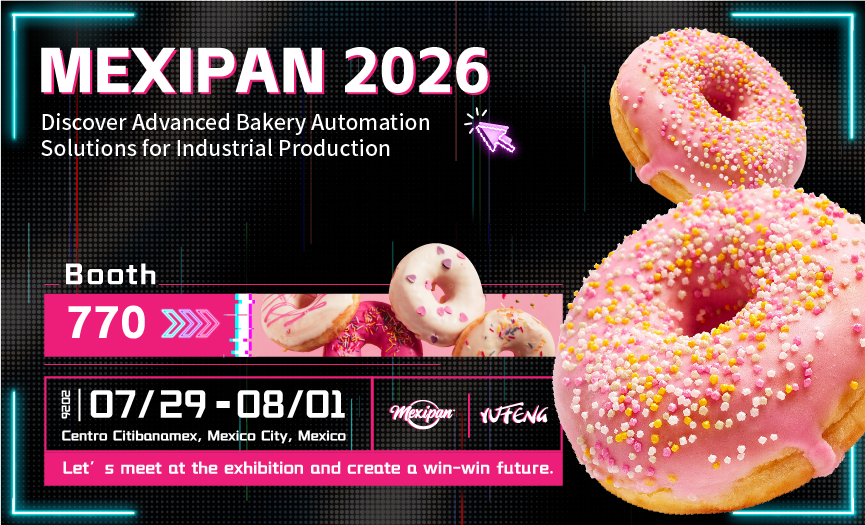
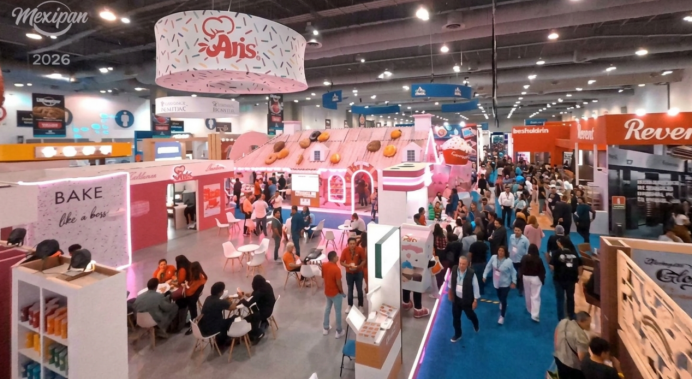
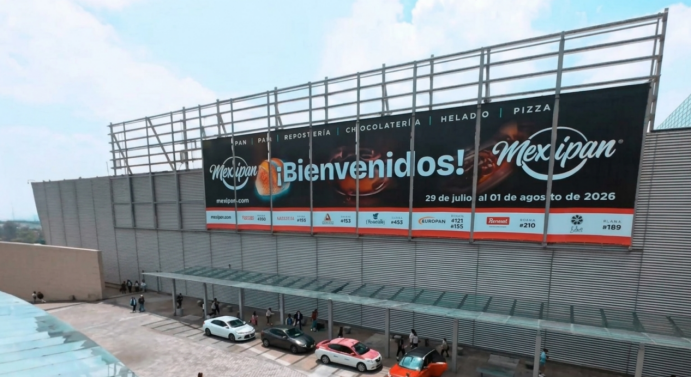
Mexico City, July 29, 2026 — on the floor of MEXIPAN.
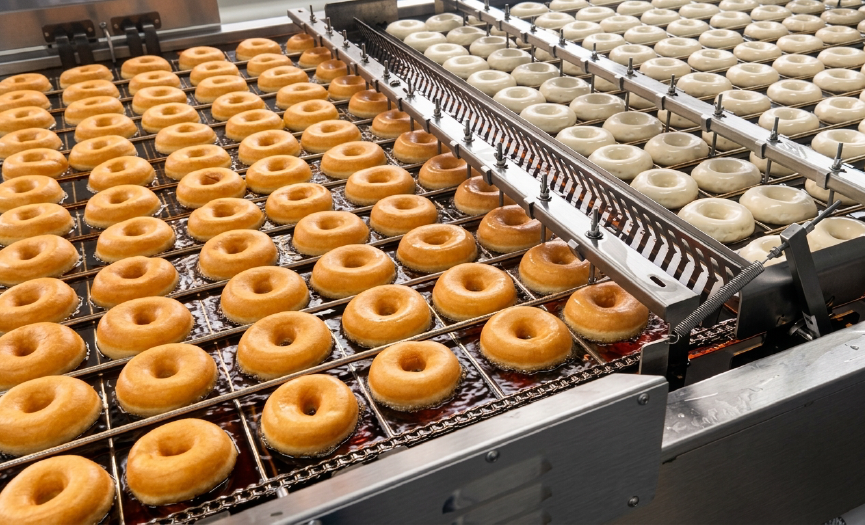
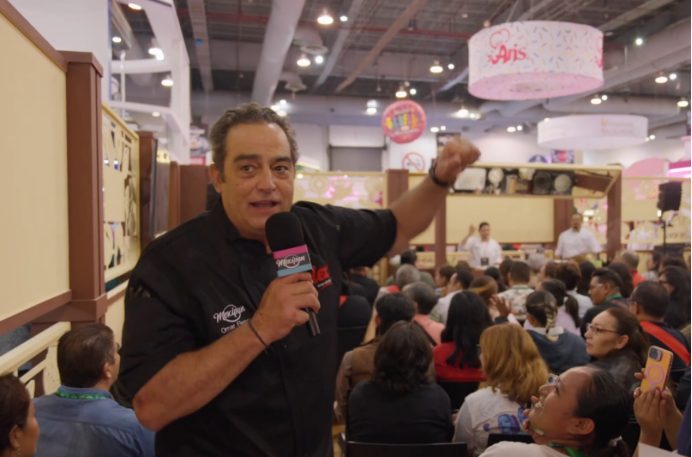
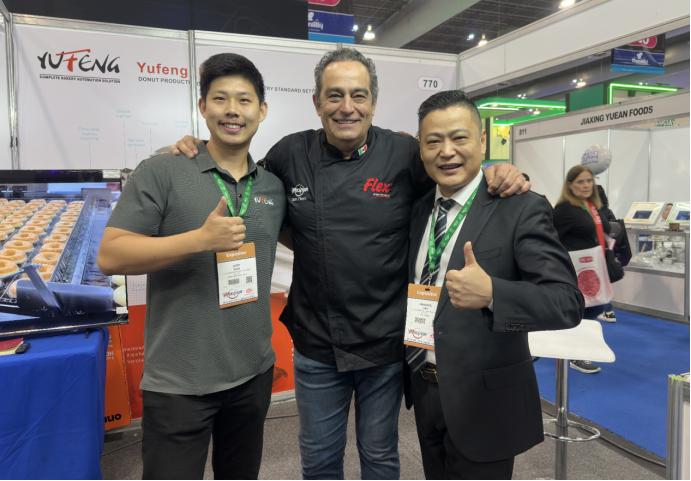
At 11 a.m., three deep rows of visitors had gathered around the Yufeng Machinery booth. At the center of the crowd stood Omar Fierro, one of Mexico’s best-known actors and television hosts, leaning in to watch a fully automated yeast donut line in operation: dough enters at the feed inlet and, through a succession of stages, emerges as golden, sugar-glazed donuts — with virtually no human intervention, true end-to-end automated production.
Turning to the camera, Omar said: “Esto es impresionante.” (“This is impressive.”) The remark was later edited by his team into an exhibition vlog, where it drew more than 120,000 views on social media.
A Global Gathering That Connects an Entire Industry Chain
MEXIPAN is no ordinary food exhibition.
In Mexico City in 2026, more than 250 exhibitors, over 42,000 visitors and 58,000 registrations — behind these numbers lies a collective gear shift now underway in Latin America’s baking industry. From machinery and production equipment to raw materials, semi-finished goods and packaging, and on to cooling and fermentation systems, software, training and education, MEXIPAN connects an entire industrial chain.
For Mexico, baking has never been merely “an industry.”
It is the smell of fermentation drifting from the corner bakery at dawn; the donuts that are indispensable on the family table at weekends; a daily staple consumed at roughly 34 kilograms per person per year. Traditional craftsmanship runs deep here — many bakeries still work to recipes thirty years old, rounding dough by hand and proofing it naturally.
At the same time, the pressures of chain expansion, standardization and efficiency gains are closing in fast.
What MEXIPAN provides is precisely a platform where “time-honored craft” and “new technology” meet. The 2026 edition featured professional competitions, hands-on technical sessions and industry events, bringing traditional skills and innovative equipment into dialogue within a single space.
Two Production Lines — and Why These Two?
What Yufeng Machinery brought to MEXIPAN were two core lines: a fully automatic cake production line and a fully automatic yeast donut production line.
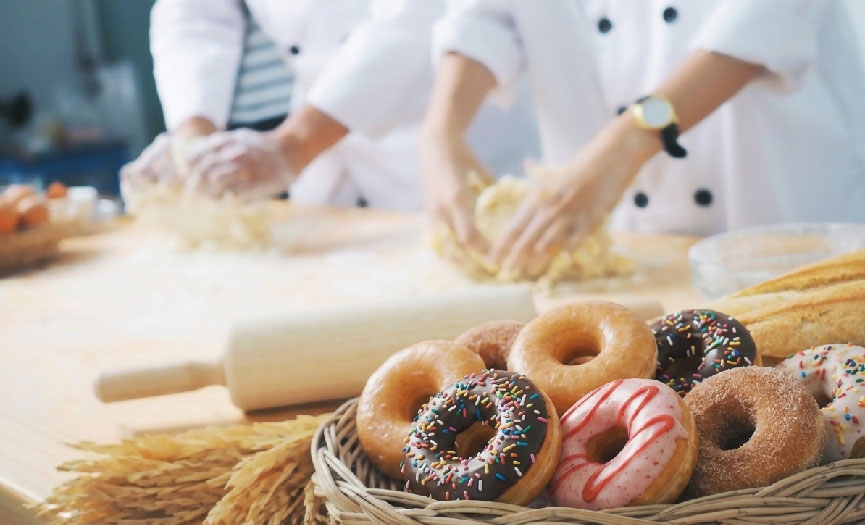
Yeast donuts occupy a position in Mexico and across Latin America much like that of baozi in China — a national staple whose process is exceptionally hard to standardize. The traditional method relies on skilled workers to round the dough by hand and judge proofing time; the fermentation window is narrow, and a difference of one degree in temperature or 5% in humidity alters the final texture. A shop producing 3,000 donuts a day typically needs four to five skilled workers in attendance throughout.
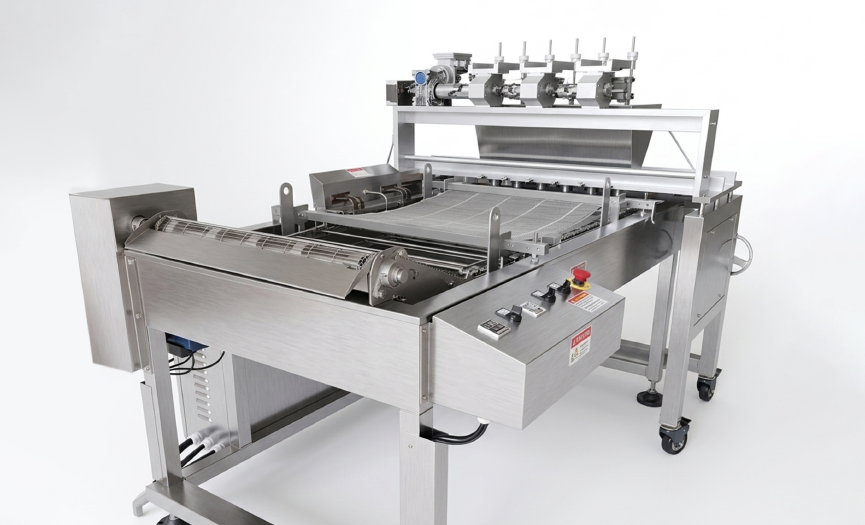
Yufeng’s fully automatic yeast donut line is a closed-loop intelligent line covering the entire process — mixing, forming, proofing, frying, cooling and chocolate coating. Its core competitiveness lies not in the iteration or upgrade of any single component, but in the coordinated control and flexible adaptation of the line as a whole — a working example of the deep integration of smart manufacturing and flexible manufacturing.
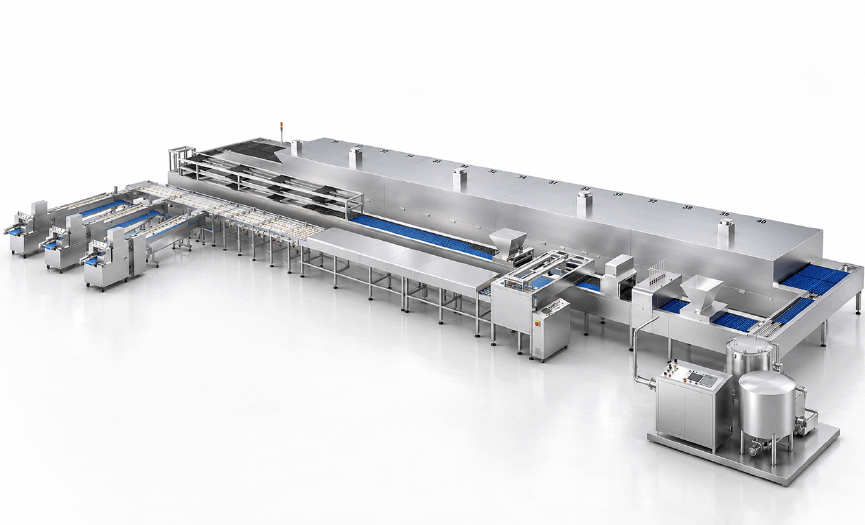
The fully automatic cake line integrates depositing, baking, cooling, demolding and surface decoration into a single system, with a daily capacity of 24 tonnes. Its purpose is to meet overseas food producers’ demand for standardized, large-scale output through a fully automated closed loop.
Both lines drew crowds of Latin American visitors during the exhibition. But what truly made them break out was the arrival of Omar Fierro.
 A Special Visitor
During the exhibition, the Yufeng booth received an unusual guest.
Unlike the average attendee, he did not walk briskly past the display. He stopped in front of the donut line. Watching the dough move through forming, fermentation, frying, cooling and finally chocolate coating, he asked detailed questions, focusing in particular on temperature, humidity and parameter adjustment during fermentation.
Only when staff on site recognized him did they realize this was no ordinary baking enthusiast.
He was Omar Fierro — the renowned Mexican actor and television host. More to the point, he had competed in El Gran Pastelero: Bake Off México, the Mexican version of The Great British Bake Off, finishing as runner-up in its first season.
For someone who has genuinely competed in baking, his interest in the equipment clearly went beyond “taking a look at a Chinese machine.” His questions quickly moved from “What can this machine do?” to “Can this machine work to my process?”
Pointing at the running donut line, Omar asked: “This line is beautiful — but is its process fixed? I’m a baking enthusiast, and I know that handmade bread is all about controlling variables. My recipe, for instance, needs a specific temperature and humidity for proofing. Can this machine accommodate that?”
Yufeng’s technical lead smiled and replied: “The machine can certainly accommodate your recipe. Our multi-zone temperature system and humidity control parameters are fully configurable. Whether you need to simulate a particular ambient condition or adjust the proofing duration, we can set and fine-tune everything to your process requirements. Our aim is not to make everyone bake the same bread, but to help you reproduce your own recipe perfectly, in a stable environment.”
Omar nodded, approval evident in his eyes: “That’s the right approach. Technology should serve people, not constrain them.”
For the Yufeng team, that remark carried more weight than any award at the show.
From Selling Equipment to Solving Customers’ Real Problems
In the past, the typical model for Chinese manufacturing exports to Latin America was: quote an FOB price, ship a machine, and guide installation remotely. Once the customer took delivery, they would find the machine itself sound but mismatched with their own process — different donut recipes, flour with different protein content, wide local voltage fluctuations, high workshop temperatures. Problems surfaced one after another, and the machine ended up as “an expensive ornament.”
What Yufeng demonstrated at MEXIPAN was a different logic.
After seeing the cake line on site, the owner of a Mexican bakery chain raised a specific problem: “We make filled cakes with relatively high moisture content, and they tend to break during demolding. Can your production line handle that?” The technical team demonstrated the production process on the spot and explained the mold pretreatment step in detail: before each production run, the cake molds are thoroughly cleaned automatically, after which the equipment sprays an even layer of food-grade release oil onto the mold surface. Combined with the demolding module’s precisely controlled vacuum suction, this ensures the cakes release cleanly once baked.
The team also recommended holding batter viscosity within a defined range during depositing, and proposed running a full trial production with the customer’s own recipe at the subsequent sampling stage.
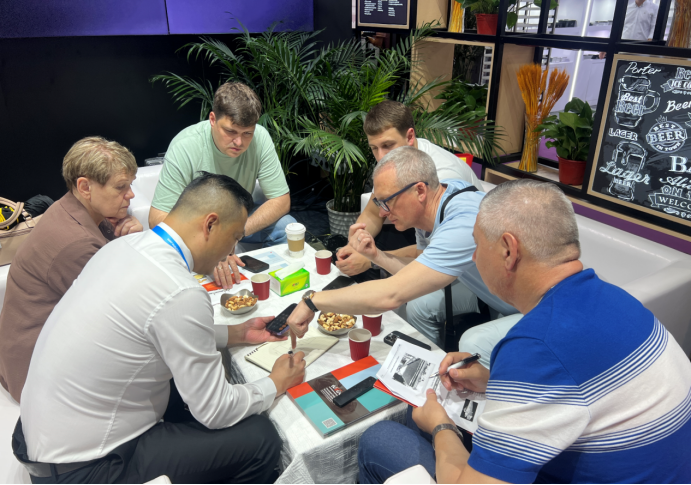
During the exhibition, the Yufeng team held in-depth discussions with more than a dozen baking companies from Mexico, Colombia and Chile. Three of them moved on to the sampling and customized-solution stage.
Technology Comes In; Experience Is Integrated
Latin America’s baking industry is not short of good products. Mexico’s concha (shell bread), marranito (gingerbread pig bread) and pan de muerto (bread of the dead); Colombia’s pan de bono — these products, rooted in local food culture, are already good enough. The real challenge is how to reproduce that quality consistently, to standard, and at scale. This is precisely where the combination of smart manufacturing and flexible manufacturing comes to life: using digital tools to lock in process standards, and configurable capabilities to accommodate diverse needs.
That is exactly the capability Chinese intelligent equipment brings.
But the reverse is also true: Chinese equipment makers need the “calibration” of local experience. Baking ingredients and production processes differ markedly across Latin American countries and regions — wheat flour varies in protein content, water absorption and gluten characteristics; fermentation methods and times differ; even consumer preferences for sweetness, mouthfeel and crumb structure diverge. For equipment, these are not “details” external to the production line; they are the critical parameters that determine whether the line can actually run. However advanced the automation, it will struggle to deliver its intended results if it is divorced from local ingredients and process conditions. Automation is not about changing the product — it is about making a good product available to more people.
This, in fact, is not a new mindset formed after MEXIPAN; it is the working method Yufeng has long adhered to. Faced with differing product requirements across countries and customers, the team does not simply replicate the standard solution used in the Chinese market. Instead, it engages in process validation from the very outset of a project — testing against the customer’s recipe, ingredient characteristics, production environment and product standards, running repeated experiments and trial runs to get the process right first, and only then settling on the equipment solution.
Every overseas project in turn enriches Yufeng’s process database and drives iteration and upgrading of its equipment. Feedback from the Latin American market is becoming a new starting point for Yufeng’s product evolution.
From Mexico City: A New Chapter in Chinese Manufacturing’s Global Expansion
The four days of MEXIPAN 2026 passed quickly.
But what the exhibition left behind was more than photos and business cards collected at the booth.
Omar Fierro’s vlog introduced the term “Chinese bakery equipment” to Mexican consumers for the very first time; in-depth talks with more than a dozen Latin American companies sent the Yufeng team home with concrete process requirements and directions for improvement. The meaning of Chinese manufacturing going global is undergoing a quiet but profound shift:
- From “selling equipment into more countries” to “truly integrating that equipment into more countries’ industries.”
- From “delivering a machine” to “delivering a production line that consistently turns out good products.”
- From “going global” to truly integrating in.