

From Following to Setting the Rules: How China’s Bakery Machinery Industry Is Breaking Through with Standards
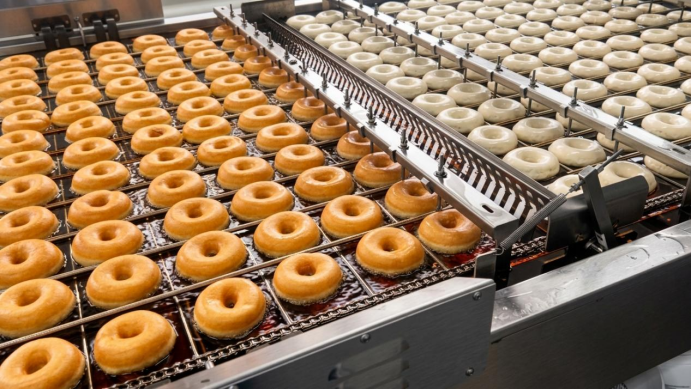
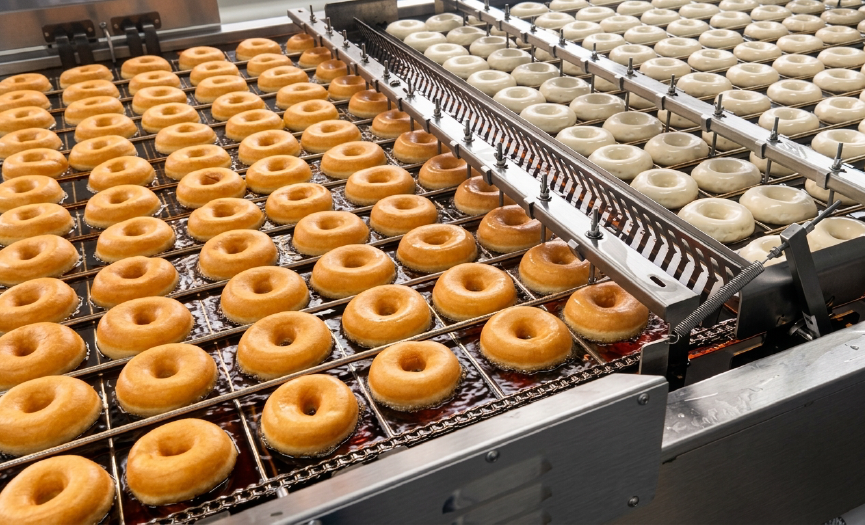
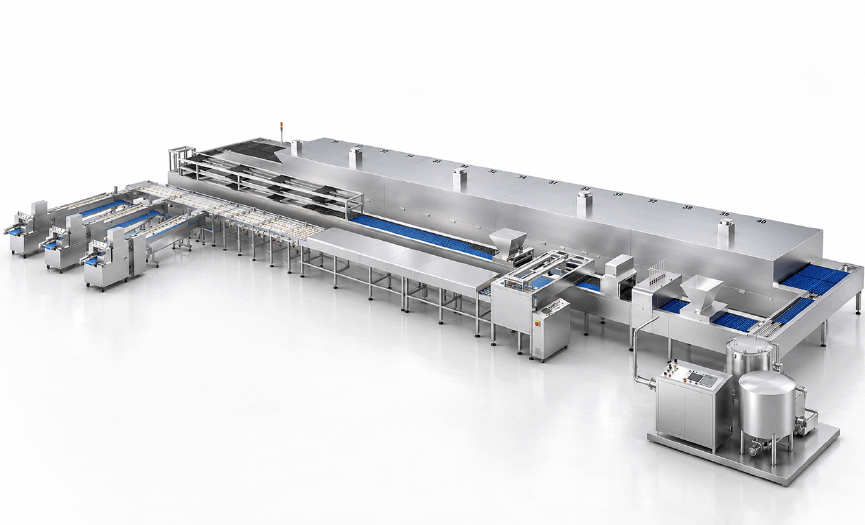
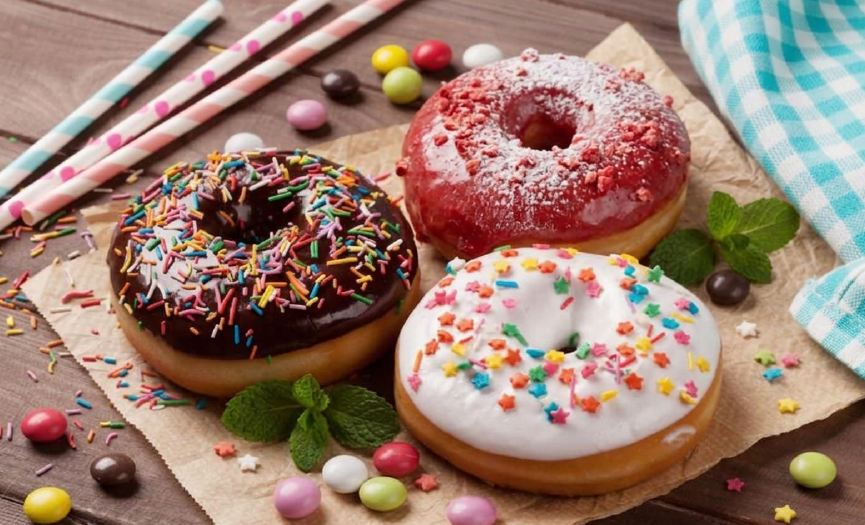
On September 9, 2019, a fully automatic donut production line was running at full capacity inside Shantou Yufeng Machinery Co., Ltd. Mixing, conveying, forming, proofing, frying, coating and decorating—the dough passed through the entire process and emerged as rows of golden donuts. The proofer was maintained at 45°C, the fryer at 175°C, and each donut spent 85 seconds in the hot oil.
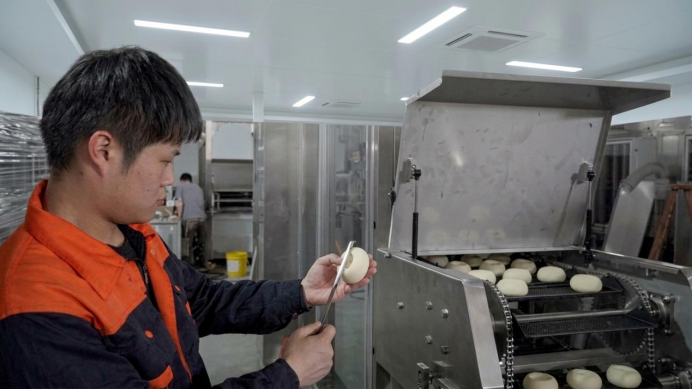
Beside the line, technicians carried out their assigned tests. Some used vernier calipers to measure each donut’s outer and inner diameters; others weighed them individually, while another group cut them open to check whether the filling was evenly distributed. Three rounds of inspections were conducted, with 100 randomly selected donuts in each round. Of the 300 donuts tested, 299 passed, giving an average pass rate of 99.7%.
That day, the test records filled with figures were handed to the standards drafting team. No one realized that these numbers would later become benchmarks for China’s entire donut production-line industry. Just two years earlier, the company itself had been on the other side of the measuring scale.
An Industry Without Standards
By then, China’s food machinery industry was the largest in the world, but the rules were largely set elsewhere. Around 70% of existing products relied only on technical specifications drawn up by individual companies. Whether equipment performed well, was safe, or could be exported was often a matter of differing opinions. More than 80% of trade barriers in international markets were technical barriers—often rooted in competing standards.
The problem was especially clear with donut production lines. A line links more than a dozen processes, and a failure at any stage can bring the whole system to a halt. Yet China had no domestic standard to follow, nor any suitable overseas standard to refer to. Acceptance testing and safety requirements were left to verbal agreements between buyers and sellers.
Yufeng Machinery began in a workshop in Shantou. Over more than a decade, it supplied automated donut and cake production lines to over 60 countries and regions. But every move into a new market meant navigating a maze of requirements: European certifications, national regulations and technical agreements drafted by buyers. However good the equipment was, the rules were not in the company’s hands.
From Making Products to Setting the Rules
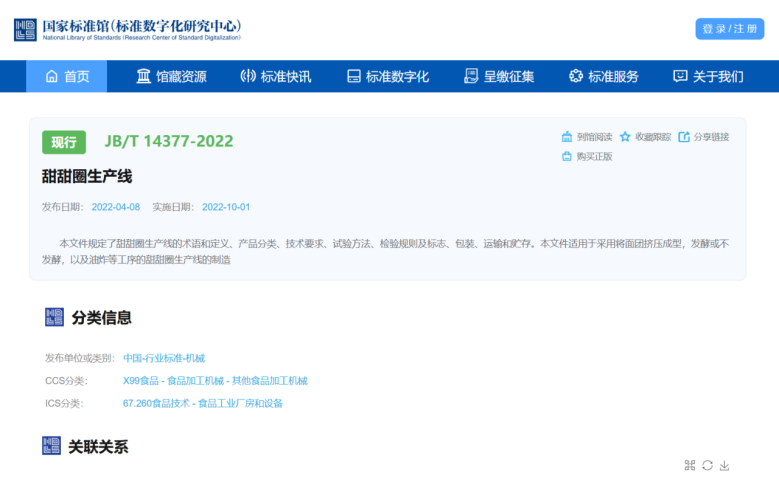
Source: National Digital Standards Museum
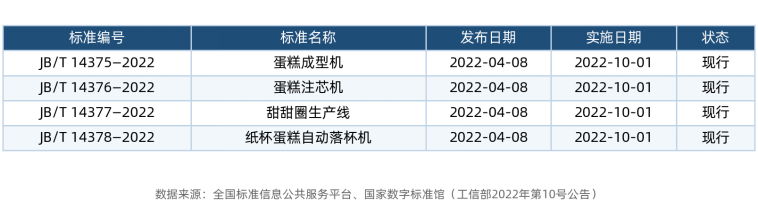
The turning point came in 2018, when the Ministry of Industry and Information Technology of China issued its second batch of projects for the development and revision of industry standards. “Donut Production Line” was among them, and Yufeng Machinery was appointed as the lead drafting organization.
Why Yufeng? The answer lay in its technical track record. The company had introduced what was then China’s highest-capacity donut production line, capable of producing 9,600 donuts per hour. That figure was later incorporated directly as the upper limit of the production-capacity range in the industry standard.
Its technical credentials are also reflected in its standards work. To date, Yufeng Machinery has participated in and led the development of 11 standards. Four industry standards led by the company—Cake Forming Machine, Cake Filling Machine, Donut Production Line, and Automatic Paper Cup Feeder for Cupcake Machines—came into effect on October 1, 2022, and all remain in force. Two additional standards are currently being advanced through the application process. From individual-machine specifications to whole-line performance indicators, these standards make the company’s technical expertise transparent and demonstrate its ability to define measurable requirements. Technology that has not been proven in practice cannot produce figures that will convince an entire industry.
“First-class companies set standards, second-class companies build brands, and third-class companies make products.” For Yufeng, leading the drafting of a standard was not simply an honorary title. It marked a change in role—from a company constrained by rules to one helping shape them.
Two Years in the Making
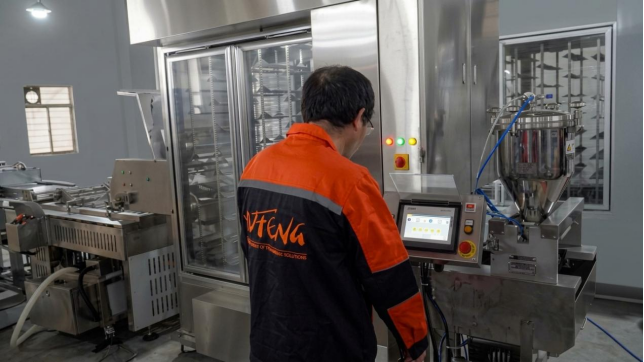
Drafting the standard was far more difficult than expected. The hardest part was deciding on the numbers. How many donuts should a line produce per hour? Set the figure too low, and it would fail to reflect the technology; set it too high, and smaller manufacturers would be unable to meet it. The working group repeatedly compared test data from mainstream models and settled on a range of 1,200 to 9,600 donuts per hour. The lower limit accommodated entry-level production capacity, while the upper limit represented the peak then achieved by domestically made equipment.
Noise levels posed a similar challenge. Fryers, fans and conveyor belts all contribute to the overall sound, and excessive noise affects workers first. After reviewing test results, the drafting team set the upper limit at 75 decibels—5 decibels higher than the limit for an automatic paper cup feeder for cupcake machines. This production line also involves hot oil and fans, but the allowance could not go any further.
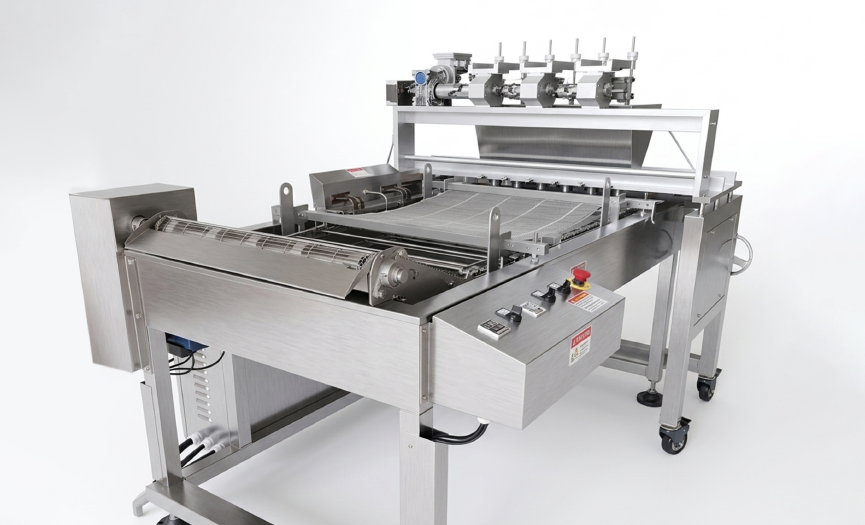
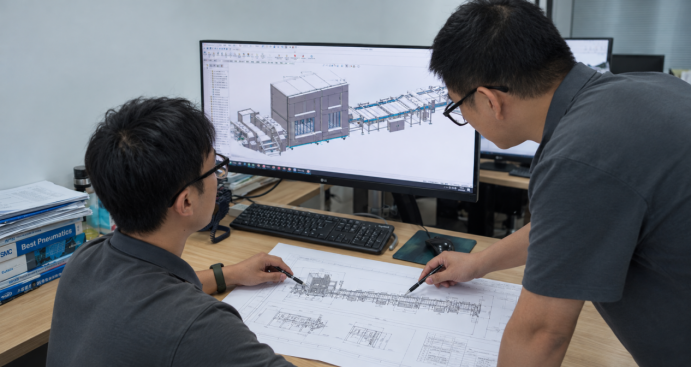
Beyond the numerical requirements, the team had to resolve many practical details: material selection, weld inspection, steam and water piping, and protective measures around fryers. The team visited manufacturers and users, incorporated real-world problems into the clauses, and revised the draft several times.
It took two years to move from the initial draft to the submission version for approval. On October 1, 2022, industry standard JB/T 14377—2022 officially came into effect—the first industry standard in China for this type of product.
The Value of a Standard
The significance of the standard can be measured on three levels. For manufacturers, it provides clear criteria: every unit must undergo factory inspection, type testing is conducted periodically, and materials, welding, assembly and electrical safety are assessed against a common benchmark. For the industry, it fills a longstanding gap: manufacturers, users, supervisory bodies and testing organizations can all apply the standard, ending the era without a common reference. For Chinese manufacturing, it strengthens the ability to help shape the rules—from participating in global production networks to contributing to global standard-setting, a necessary step toward higher-value manufacturing.
Behind the Rules
That autumn in 2019, the technicians who entered 99.7% into a test sheet may have thought they were simply completing a routine inspection. A few years later, the result had become a benchmark against which production lines across the industry could be assessed. Technical discussions and round after round of revisions ultimately produced a shared standard. There was no overnight breakthrough—only careful deliberation; no instant success—only two years of painstaking work.
A donut’s journey turns a lump of dough into something sweet. An industry’s journey turns individual machines into a shared set of rules. From a workshop in Shantou to becoming the lead drafting organization for an industry standard, Yufeng Machinery has followed a path shared by many “hidden champions”: from making products to building a brand, and then to setting standards; from following the leaders, to running alongside them, and ultimately helping lead the way.